Sample review
A client’s review, as Sahi Capital prints it.
Made from a sample book, not a real client. Every rate on it was worked out by the same engine that prints a real one.
Download the PDF4 pages, 40 KB
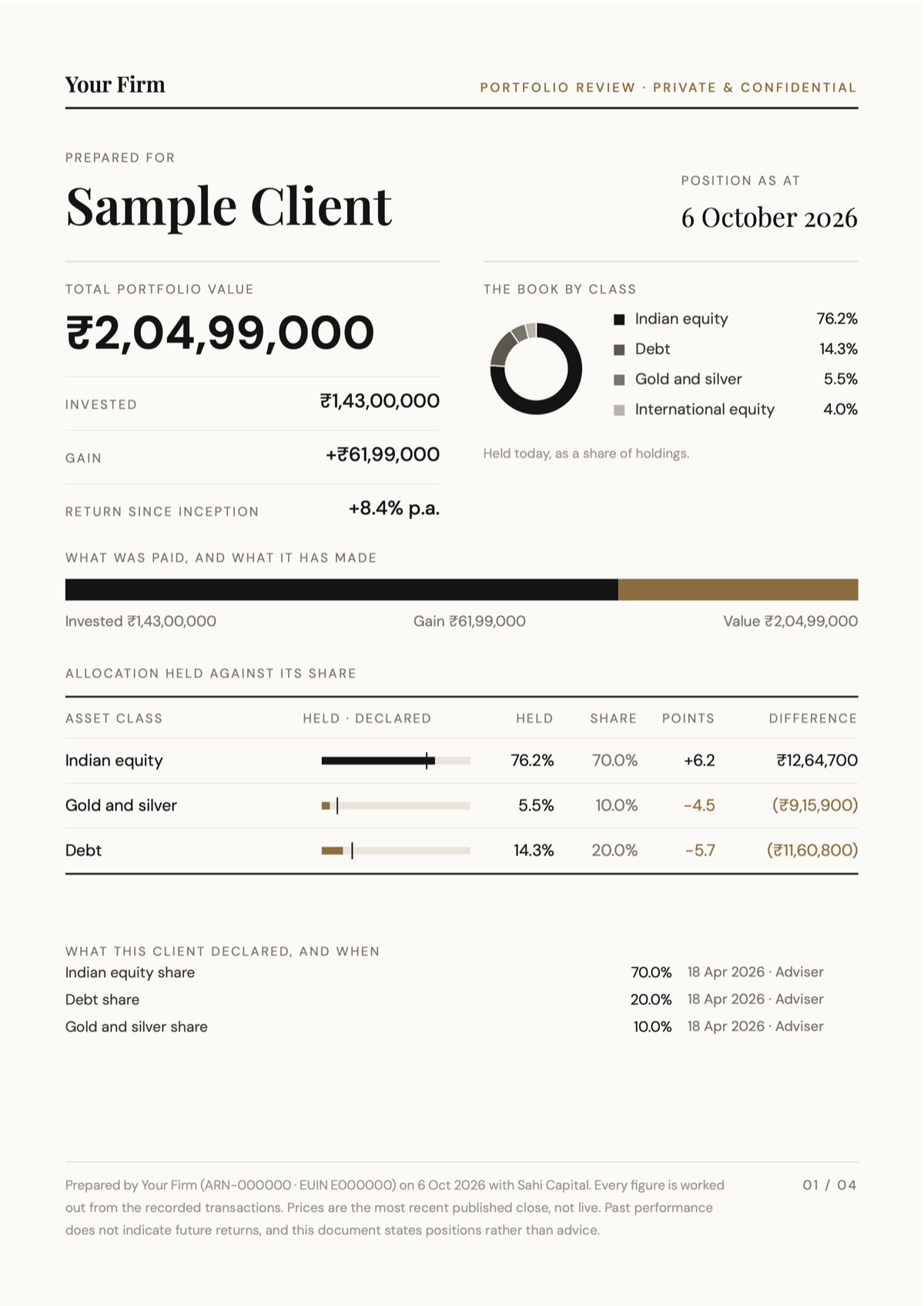
The three figures first.
What went in, what it is worth and the difference, with a return that accounts for when each rupee was invested. Then the allocation beside the shares the client agreed to, in points and in rupees, and when each share was agreed.
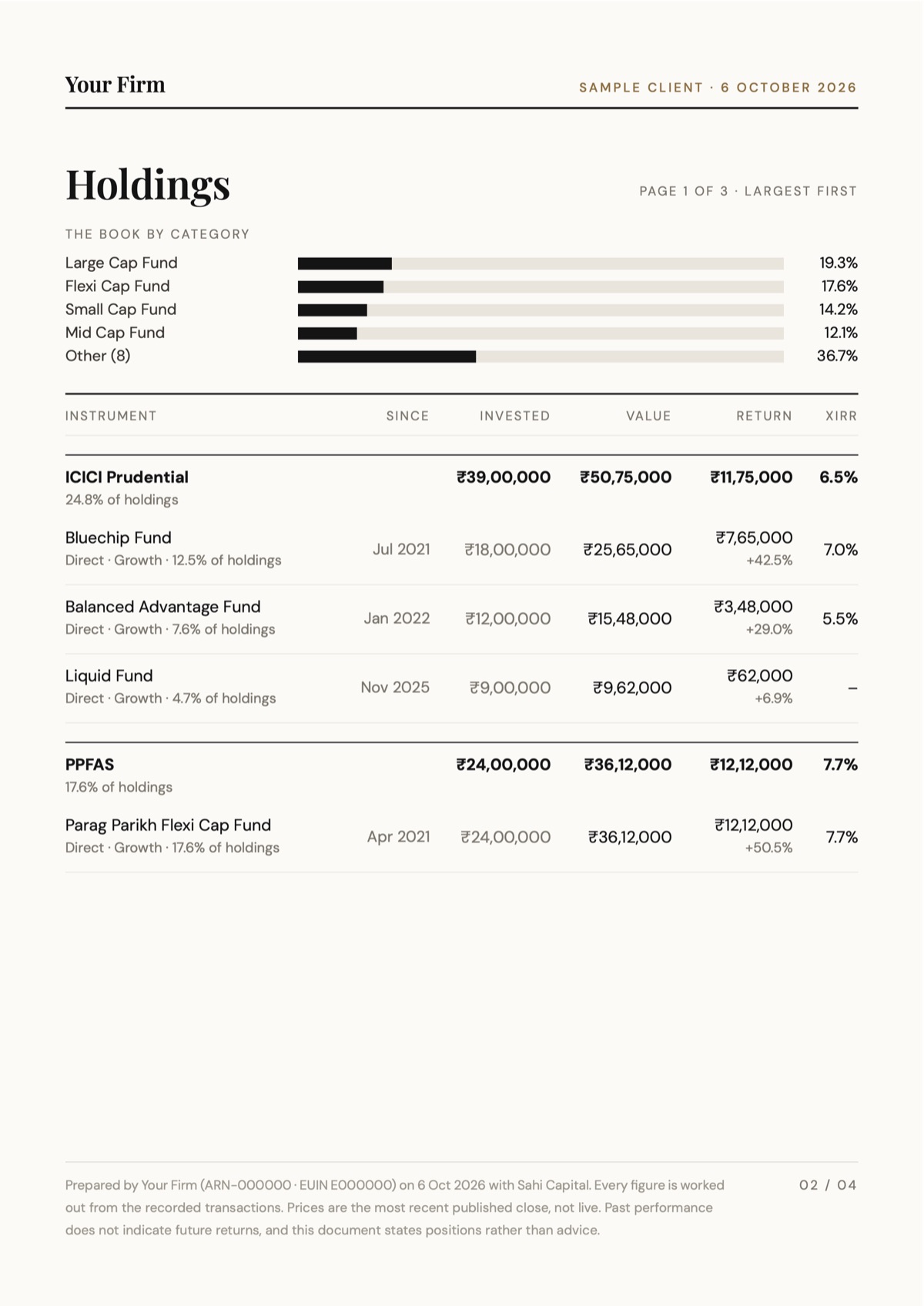
Holdings, by fund house.
Every holding with what went in, its value, its gain and its own XIRR, grouped under the house that runs it, with a subtotal for each. Concentration is visible without any arithmetic.
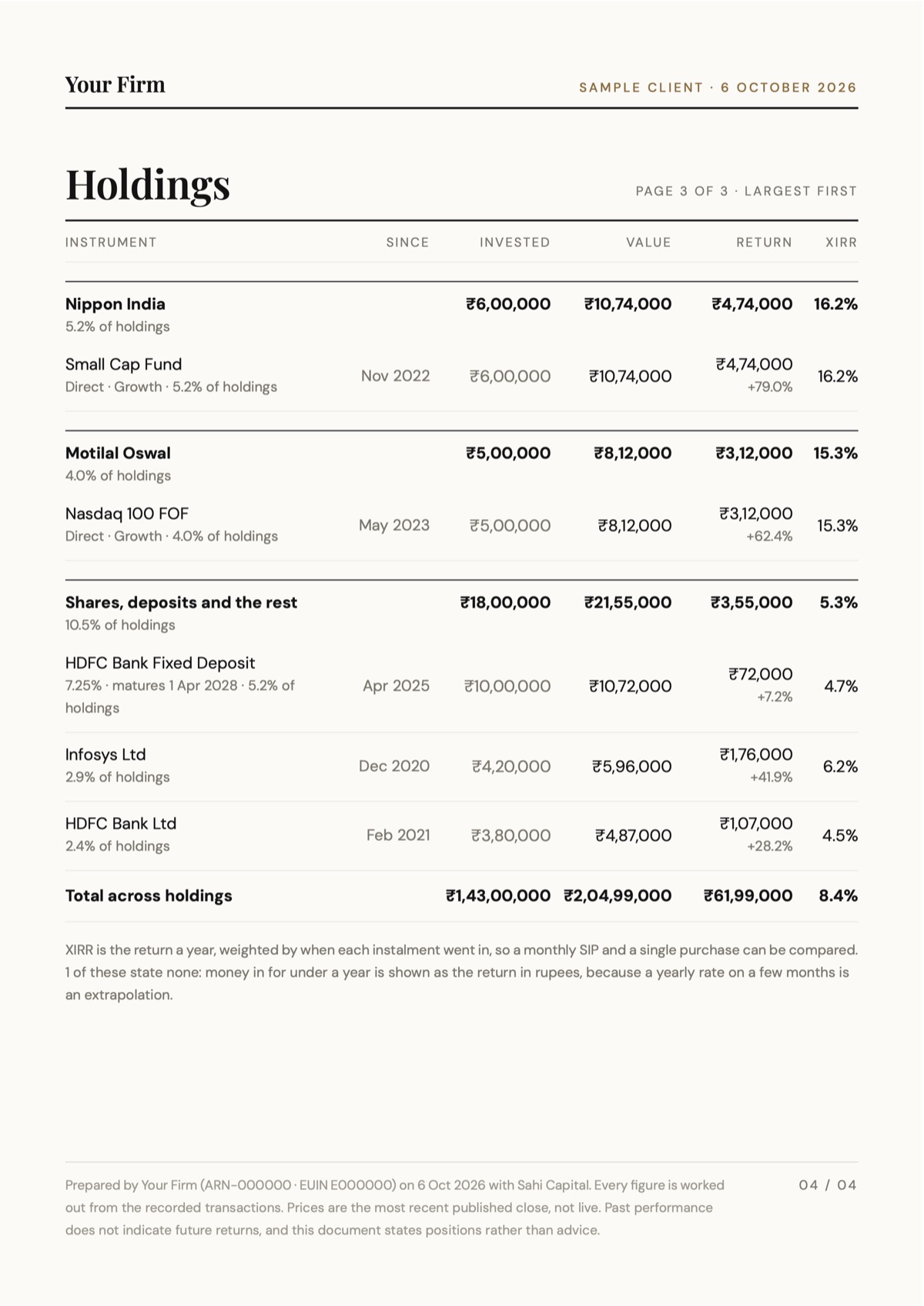
The total, and what it means.
Shares and deposits are gathered after the funds. The total states the book’s own money-weighted rate, and the note says what XIRR is, and why a holding bought under a year ago shows rupees instead.
What a review should contain, and why, is set out in what a client portfolio review should contain, and the rate in its last column in how to explain XIRR to a client.
Ask for an invitation.
Write, and say how many clients you look after.